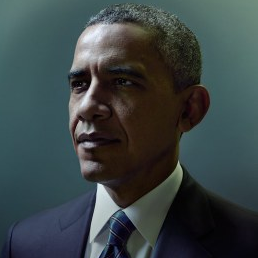
Regarding the President's prime time speech last night, I agree that the speech probably should not have been given, but it had to be given to maintain the credible threat of force that is driving the diplomatic negotiations. So the speech itself, in my mind, was less important than reactions to the overall situation. And I think Andrew Sullivan and Booman best describe my thoughts:
Andrew Sullivan:
That was one of the clearest, simplest and most moving presidential speeches to the nation I can imagine. It explained and it argued, point after point. Everything the president said extemporaneously at the post-G20 presser was touched on, made terser, more elegant and more persuasive. [...]
I’m tired of the eye-rolling and the easy nit-picking of the president’s leadership on this over the last few weeks. The truth is: his threat of war galvanized the world and America, raised the profile of the issue of chemical weapons more powerfully than ever before, ensured that this atrocity would not be easily ignored and fostered a diplomatic initiative to resolve the issue without use of arms. All the objectives he has said he wanted from the get-go are now within reach, and the threat of military force – even if implicit – remains.
Yes, it’s been messy. A more cautious president would have ducked it. Knowing full well it could scramble his presidency, Obama nonetheless believed that stopping chemical weapons use is worth it – for the long run, and for Americans as well as Syrians. Putin understands this as well. Those chemical weapons, if uncontrolled, could easily slip into the hands of rebels whose second target, after Assad and the Alawites and the Christians, would be Russia.
This emphatically does not solve the Syria implosion. But Obama has never promised to. What it does offer is a nonviolent way toward taking the chemical weapons issue off the table. Just because we cannot solve everything does not mean we cannot solve something. And the core truth is that without Obama’s willingness to go out on a precarious limb, we would not have that opportunity.
The money quote for me, apart from the deeply moving passage about poison gas use at the end, was his description of a letter from a service-member who told him, “We should not be the world’s policeman.” President Obama said, quite simply: “I agree.” And those on the far right who are accusing him of ceding the Middle East to Russia are half-right and yet completely wrong. What this remarkable breakthrough has brought about is a possible end to the dynamic in which America is both blamed for all the evils in the world and then also blamed for not stopping all of them. We desperately need to rebuild international cooperation to relieve us of that impossible burden in a cycle that can only hurt us and the West again and again.
 By
7 Comments
By
7 Comments