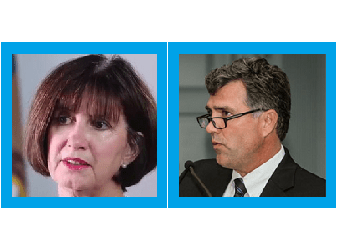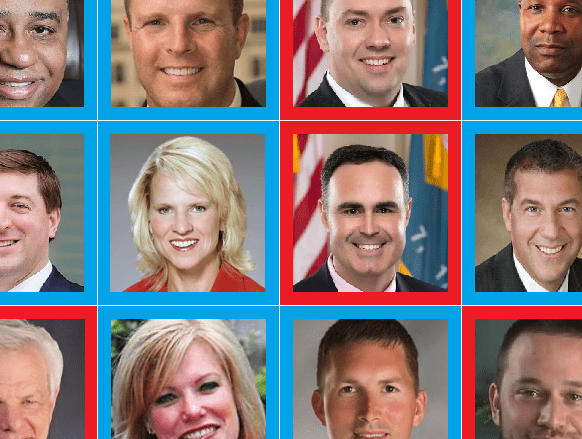
From Top to Bottom, Left to Right, New Castle County Council President Chris Bullock (D), 2014 Democratic Treasurer Nominee Sean Barney (D), Senator Brian Pettyjohn (R-19th SD), former Sussex County Register of Wills Greg Fuller, Sr. (D), Senator Bryan Townsend (D-11th SD), Senator Bethany Hall Long (D-10th SD), Senator Ernesto Lopez (R-6th SD); Kent County Levy Court Commissioner Brad Eady (D), Senator Gerald Hocker (R-20th SD), Senator Nicole Poore (D-12th SD), Representative Quinn Johnson (D-8th RD), and Representative Jeff Spiegelman (R-11th RD).
The office of Lt. Governor is so unimportant, with no imperative and necessary duties assigned to it, that it can, and will, remain vacant until January 20, 2017. When former Lt. Governor Matt Denn resigned to be sworn in as Attorney General, there was some talk about passing a new law to address the vacancy (to allow the Governor to appoint a replacement or to allow a special election), but that talk has died down, and the likely scenario is that Secretary of State Jeff Bullock will remain next in line to the Governorship until one of the people above is sworn in.
Yet, this office is a platform is for future ambition. You don't run for Lt. Governor so you can just preside over the Senate and cast tie breaking votes. You run to advance issues and make a name for yourself, usually for a future race for Governor.
Come inside to find out whom I think is running.
 By
35 Comments
By
35 Comments