
I am a Democrat. I am a progressive Democrat, but I am a Democrat. And being a Democrat means I care about the Democratic Party. I care about building out the Democratic Party. Electing more and better Democrats across the land. Recruiting more and better candidates. Taking over state legislatures and Governorships. One of the reasons I am very resistant to a Bernie Sanders campaign is that he is not a Democrat. He does not care about the party or party building. In order for Bernie Sanders to win my vote in the primary he would first have to personally register as a Democrat in Vermont. I’m serious. Until he does that, I am not even considering voting for him, no matter how much I might agree with him.
One of the negatives of the Obama Presidency has been the massive losses the Democratic Party suffered at the state and local level in 2010 and 2014. It is not necessarily President Obama’s fault personally, as the same thing happened to President Clinton. Both Presidents came into office in economic downturn with an ambitious reform agenda and majorities in both Houses of Congress that allowed them to enact much of their plans. Benefits from the reforms do not come immediately (i.e. within 18 months), and thus voters more disposed to support the President are discouraged and stay home in the midterms, while angry conservatives who are eager to vote against the President’s party turn out in droves.
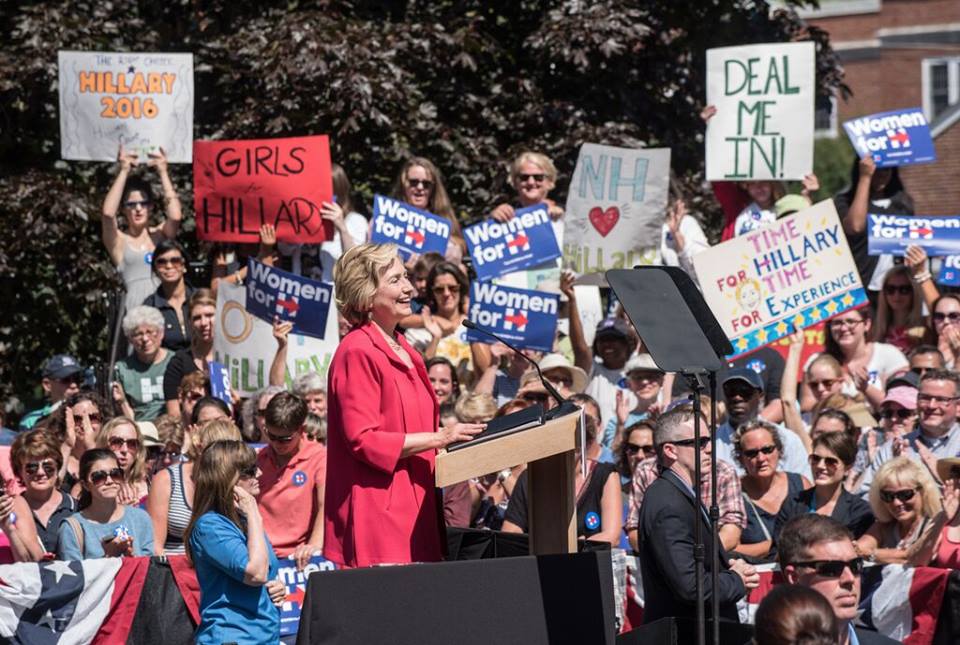
One of the reasons I am currently leaning towards supporting Hillary is that she and her campaign are attempting to build the party back up again, like Obama did in his first run for the Presidency:
Hillary Clinton had a message to relay in private meetings with state and local Democrats during her highly-choreographed swings through Iowa and New Hampshire this month: let me help you.
The implication? She’ll fix the party infrastructure that withered under President Barack Obama.
The Democratic front-runner has stressed the importance of bolstering — and in the case of Iowa, rebuilding — the state parties from the ground up, as they received scant national attention since 2008. Some Democrats even pin the blame on the president himself.
Clinton’s pitch is especially resonant in Iowa, where her team is already encouraging rural Democrats to run for their school boards and county commissions. It’s not just a standard exercise in party-building: Team Clinton is betting that the organizing and goodwill generated by this outreach will pay dividends when it comes time to flip the switch on her own caucus and primary machines.
“What typically happens is when a president comes in, the national [party] committee becomes a presidential re-elect, and that hollows out the local parties,” says former Vermont Governor and Democratic National Committee chair Howard Dean, who ran for president in 2004. The result, as outlined in the party’s February midterm autopsy report, has been sweeping losses for Democrats at every level during the Obama era, from statehouses to the U.S. House and Senate.
That has to change. The DNC must always build the party from the bottom up. We must always follow the Howard Dean 50 State Strategy. The DNC must never divert from that mission to support the incumbent President as a vehicle for his or her reelect. Instead, the President should have his or her own Campaign Committee that remains active nationwide throughout their Presidency. The DNC need not be co-opted.