In France, Armistice Day is still a big deal — a natural reaction, I suppose, considering most of the fighting in what was dubbed a “world” war was done on French soil. Nov. 11 is a national holiday, and it doesn’t get moved near a weekend. A minute of silence is still observed at 11:11, and almost everything is closed.
We don’t take that war quite so seriously in the U.S., where it ranks well behind World War II and the Civil War in popular imagination. Still, there was a period in the 1960s when Hollywood glamorized the fighter pilots of the Great War — “The Blue Max” came out in 1966, the same year this single climbed to No. 2 in the Hot 100.
The song was written by Dick Holler, who would later go on to write “Abraham, Martin and John.” He told the Nashville Tennessean,
[T]here was a huge hit record called “The Battle of New Orleans” by Johnny Horton. He was a country and pop singer and it went number one. Three months later, he had a song called “Sink the Bismarck,” which went top 10. These were both recapitulations of war time. So, I’m thinking of how I have always been an airplane fanatic and my favorite fighter pilot was Manfred Von Richthofen, the Red Baron*. I wrote the song about him. No Snoopy. We went down to Cosmo’s in New Orleans and recorded it, and spent all day putting in airplane sounds and machine gun bullets and took it around to every major label. Nobody wanted to put it out, so it sat on the shelf for three years. And then one Sunday**, (“Peanuts” creator) Charles Schulz introduced Snoopy flying in the doghouse, being chased by the Red Baron.
The song was rediscovered by producer Phil Gernhard, who gave it to a local bar band from Ocala, Fla., he had signed to a contract and renamed the Royal Guardsmen, the better to exploit the British Invasion. Holler didn’t even know the tune had been dusted off, with new verses about the cartoon beagle inserted, until after it was recorded. Originally Gernhard had added a line from the chorus of the McCoys hit “Hang on Sloopy,” with the name changed to “Snoopy,” but that was dropped for fear of a plagiarism suit. Gernhard had enough legal trouble on his hands once Schulz’s syndicate heard the tune — Gernhard never bothered to ask for permission to use the copyrighted character, and the courts eventually ruled that Gernhard had to forfeit his royalties from the song to the syndicator.
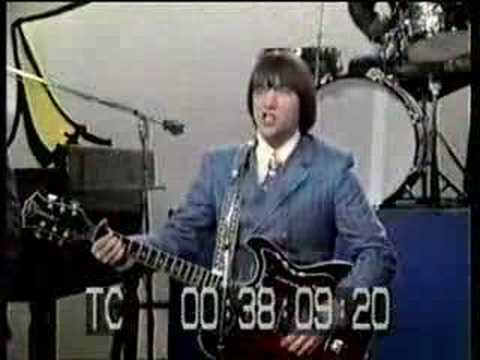
Though Schulz was never thrilled with the Royal Guardsmen making use of his creation, he did grant Gernhard permission to use Snoopy in a series of follow-up records. The original tune actually re-entered the UK charts in 1973, reaching No. 4, when it was given a ska treatment by a “band” called the Hot Shots.

*Manfred Albrecht Freiherr von Richthofen — Freiherr is a title of German nobility roughly equivalent to the English baron — is the most famous fighter pilot of all time. He was credited with downing 80 enemy aircraft, though the true number might have been greater than 100 (planes that went down behind Allied lines could not be confirmed). Most of the kills came before the invention of the Fokker triplane he’s most often pictured flying, and his acumen was based not on flying skill but deadly aim. He taught his squadron his basic rule of combat: “Aim for the man and don’t miss him. If you are fighting a two-seater, get the observer first; until you have silenced the gun, don’t bother about the pilot.”
Richthofen was killed in April 1918 while engaged in a dogfight with two Allied flyers in Sopwith Camels, the British plane that Snoopy also “flew.” Though Canadian Arthur Roy Brown was credited with the kill, forensic experts have since determined that the Red Baron was almost certainly killed by a ground-based anti-aircraft gun as he flew low over enemy lines in pursuit of a foe.
**The “one Sunday” Holler referenced was Oct. 10, 1965, shortly after the American government began its escalation of the war in Vietnam. In the years since, critics have cited Snoopy’s imaginary aerial adventures as among the high points of Schultz’s long career, but few have noted that, though Snoopy’s flying-ace alter-ego appeared for years, his skyborne soirees ceased in the early ’70s, replaced by tales of loneliness and homesickness as the battle-weary beagle made his way across a war-ravaged landscape toward Allied trenches. Every one of those strips was Schultz’s commentary not on World War I, but Vietnam.