Guest post by Nathan Arizona
In his new PBS series about the American Revolution, Ken Burns doesn’t pull any punches when he describes many of the people who supported or fought for independence from England. They were not a glorious bunch.
He calls this faction ne’er-do-wells, teen-age runaways and felons, among other types. Many demanded unthinking loyalty to the cause and sometimes required oaths to prove it. They burned the houses and crops of insufficiently enthusiastic Americans as well as British officials. One poor fellow had tea forced down his throat until he vomited. But that was nothing compared to the tar and feathering. As one historian notes, the idea sounds kind of comic until you think about covering a person’s body with boiling tar. Rebels did this to fellow Americans and British alike.
“So much rascality,” John Adams observed.
Burns has called the American revolution the nation’s first civil war. This is not usually what we think about when we think of the revolution. The usual sense of unity and nobility lies in the words of enlightenment thinkers with the philosophical idea that men (most of them) had a right to rule themselves. Of course plenty of foot soldiers were idealists who understood the broader picture.
Loyalist civilians in the colonies were relatively wealthy and educated with the most to lose from colonial rebellion. Outnumbered, they were more likely to keep their heads down instead of calling attention to themselves by writing or singing anti-rebel songs. But a few loyalist tunes have come down to us, so let’s give them their due. Maybe it’ll make us feel a little better (if we need to) about how loyalists were treated when the correct side was not always totally clear.
“The Rebels” mocks the colonials for being what some call hicks, bumpkins, clodhoppers and so on. This song opts for “tatterdemalion.” It’s pretty vicious.

“Yankee Doodle” is probably the best-known rebel song, but it was an anti-colonial tune before that. The music itself long pre-dates the American Revolution. It might have come from an old Irish song. The first lyrics likely came from the Dutch, who sang something like “yanker dider, dooder down” — nonsense words that even the Dutch probably didn’t understand. The Brits took it up in the 1600s to mock some of their own. A doodle was a fool. A dandy was a fop. Nobody wore pasta on his head. A macaroni was a wig favored by fops.
“Yankee Doodle” was then altered to make it an anti-rebel song. This version is about a colonial who tried to buy a gun from a British soldier. As you can see, both sides enjoyed the tar and feathering.

Other British versions stayed with the clueless fashion angle, characterizing the Americans as so stupid they thought a feather in their cap would serve as a fancy wig. The Americans, with a surprising sense irony, decided to take it as a compliment.
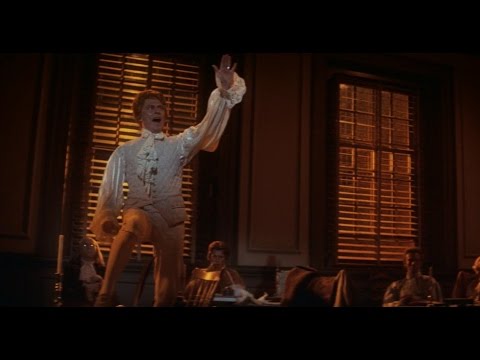
I’m throwing in the following song even though it comes from a Broadway musical and they are not always well-received. “1776” was about the revolution and mostly the 1969 show is pretty fluffy, but it does get salient points right. In “Molasses to Rum” southerner Edward Rutledge chastises northerners for hypocrisy since they also benefit from the slave trade. It’s pretty dark for Broadway.
The singer is John Cullum, who was a popular Broadway performer at the time. He sang the original version of “On a Clear Day” (for those of you still reading). Surprisingly, he later played homespun bar owner Holling Vincoeur on television’s “Northern Exposure.”