Why ‘The Charlie Brown Christmas Special’ Resonates:
My parents were atheists; I knew almost nothing about Christianity as a child, although I got the lay of the land when I was sent to Catholic school in sixth grade. Before that, my parents—especially my mother—actively worked to keep me and my sister free from religion, Christianity in particular. But we had our gods. Santa Claus and the Easter Bunny reigned over us, with great kindness and generosity, and if we came, eventually, to a crisis of faith, we dealt with it privately. My sister and I understood that our feelings about Christmas were very important to our parents. The brief—transmitted in the silent language of the family—was to be happy, because our parents had had terrible childhoods, and instead of working out their pasts in psychoanalysis or “involvement,” they threw themselves into these perfect Christmases. It was the most wonderful, extremely tense time of the year.
My earliest grasp of how Christianity worked came from the Charlie Brown Christmas special—funny, cool, beloved by all. The special was first broadcast in 1965, when Charles Schulz’s Peanuts cartoon strip was in the initial flush of its stupendous popularity (the characters had been on the cover of Time magazine that spring), syndicated in hundreds of American newspapers. Millions of children knew and loved it, so half of the work was already done: We knew that Lucy was crabby and Sally was romantic and Schroeder was single-minded. In that time, television was not an endless range of possibilities, every watcher a Prospero, conjuring up visions on command. In those days you had three networks, and if one of them was broadcasting a show for children at night, you can bet that the news had been shouted down school stairwells and across playgrounds, and you can bet that all of us were in position, sitting on family-room carpets and living-room couches, breathing as one, soaking it all in.
Charles Schulz had what Maurice Sendak had: respect for children. He understood the way they think and feel, not the way adults want them to think and feel. He understood that there’s a point in children’s growing up when Christmas doesn’t work its magic as reliably as it once did. Schulz let them explore a taboo subject, Christmastime unhappiness, while still reassuring them that Christmas is a good and fun and wonderful thing. He also insisted that there be no laugh track, saying that if the children found it funny, they would laugh. And he insisted that children, rather than adult voice actors, read the dialogue.
One more thing:
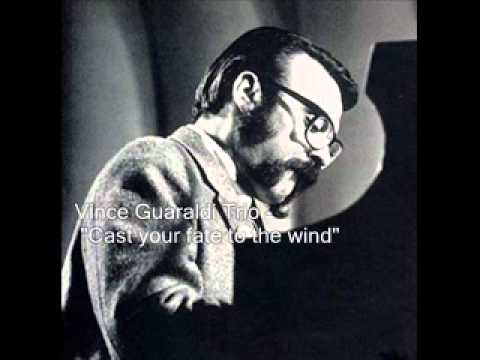
Another reason A Charlie Brown Christmas has staying power is because it’s cool. That’s because in 1963 the producer, Lee Mendelson, had an experience that many people had that year. He was listening to the radio when a song came on that wasn’t like any other. It was the B side of a single from a jazz album called Impressions of Black Orpheus. The song was “Cast Your Fate to the Wind,” by the Vince Guaraldi Trio, and if you’ve never heard it, you should play it right now. It’s a song that comes over you in a powerful way, somehow expressing the way that melancholy and happiness can combine into an intense emotion. Mendelson heard it on the radio and thought it would be perfect for a documentary he was then making about Schulz, whose work had a mid-century sophistication. The documentary never aired, but when the animated special came around he decided—what the hell?—to use the same music. That was the genius decision, the force that keeps the show from being dated:
The Word Of The Year Is Two Words: ‘Rage Bait’. Definition:
As the wordsmiths explained in their Dec. 1 press release, rage bait is “online content deliberately designed to elicit anger or outrage by being frustrating, provocative, or offensive, typically posted in order to increase traffic to or engagement with a particular web page or social media content.” While they never use the term “MAGA,” there can be no doubt that they’re talking about the decentralized, mostly online propaganda that has created the movement and given so much power to Donald Trump.
Oops, I’m veering too close to the ‘political’ on what is normally my Sunday ‘politics-free’ zone.
‘Solar-Punk’ Sustainability: Featuring ‘no pets’:
Bill Smart has never heard the word “solarpunk”. But the softly spoken 77-year-old lights up when given the definition from Wikipedia: a literary, artistic and social movement that envisions and works towards actualising a sustainable future interconnected with nature and community.
Solar refers not just to renewable energy but to an optimistic, anti-dystopian vision of the future. Punk is an allusion to its countercultural, do-it-yourself ethic.
“That’s us!” says Smart, a retired mechanical engineer. “I never knew there was a word for it. I guess I’ve been a punk all along.”
In the 13 years since he and his wife, Susan, moved in, Smart says all kinds of people have made their home here at one time or another. There are retirees like themselves, young families, movie stuntmen, journalists, children from wealthy families, Buddhist monks, composers and the odd recluse looking for privacy.
“This is the way people should be living,” says Smart. “You know, you can live in a suburb and you don’t know your neighbours. People drive into their homes, lock the garage door. Here everyone knows each other. Everyone helps keep an eye on the kids.”
It takes all types to make a village, he says. Just about the only creatures not welcome in this one are cats and dogs. Currumbin Ecovillage was conceived as a wildlife sanctuary and corridor for native Australian animals. A cat or dog may be another member of the family but they are also hungry carnivores, lethal predators and territorial animals that have significant environmental and climate impacts. For a community built around meeting the needs of humans and nature, there was no room for feline and canine friends, even on a temporary visit. Smart says: “Dogs are nice and very loyal and everything. We do miss having a dog but that’s the price we’re prepared to pay.”
RIP–Steve Cropper:
![Booker T & the MG's - Green Onions [Colourised] 1967](https://i.ytimg.com/vi/qTpLK4Zwiw4/hqdefault.jpg)
How ‘Green Onions’ was created pretty much by accident:

Play It, Steve:
