
DL Open Thread: Thursday, June 4, 2026
Not Better Late Than Never? I’m not so sure:
The biggest legislative controversy of last summer is back before the General Assembly.
Lawmakers are set to introduce a bill today that would indefinitely extend New Castle County school districts’ controversial ability to tax commercial and residential properties at different rates.
Authored by Rep. Kim Williams (D-Stanton), the bill will be filed among a slew of property tax-related proposals by lawmakers who took part in the Delaware General Assembly’s months-long committee investigation into the fallout from last year’s first-in-a-generation property reassessments.
Enacted last summer as a one-time fix, the separated tax rates – sometimes called split rates – were meant to provide residents with temporary relief from the post-reassessment tax bill sticker shock.
While the split rates reduced some homeowners’ property bills by several hundred dollars, they also sparked outcry from small business owners and spurred a months-long legal challenge by landlords and hotel operators in Delaware’s northernmost county.
Regardless, the ability for school districts to levy different tax rates for residential and non-residential property will expire on June 30 unless legislators act.
A handful of other property tax-related bills and resolutions are set to be filed today along with the split rate extension.
If passed, the bills could work in tandem to make immediate changes to address short-term concerns and create new working groups to investigate long-term solutions.
Whether the General Assembly will pass the package in its entirety during the final 10 working days of the legislative session remains to be seen.
Lawmakers must pass each of the bills included in the forthcoming property tax package in both the House and Senate before the General Assembly gavels out for a final time on June 30. Any bills that fail to pass by that date will effectively be dead in the water.
The package will now join a growing list of legislation – including next year’s nearly $7 billion state budget, healthcare reforms, banking code modernizations, hemp regulations and more – that lawmakers have only 10 working days left to address.
One thing experience tells me: If this package is rushed through, there will be unintended consequences heaped upon unintended consequences.
After a slow roll out, Delaware is speeding up its initiative to clear low-level offenses from people’s records.
Delaware passed its Clean Slate Initiative in 2021 and it went into effect in 2024, making it one of the first states to implement such a measure.
It’s meant to clear low level offenses from people’s records, such as petty theft or small drug possession, without requiring individuals to file petitions or pay fees. Other records are eligible after a period of 3 to 10 years. The goal is to improve housing and employment opportunities for people with criminal records.
But until now, these expungements were done manually. According to the 2025 State Police Report, its Clean Slate unit reviewed 16,869 cases and cleared 25,287 charges last year.
Gov. Matt Meyer observed that scratched the surface of more than a million records eligible for automatic expungement under Delaware’s 2021 law.
“When I came into office last year, very, very few of those records have been expunged,” Meyer said. “It was being done by hand, and taking way too long.”
He said the problem was as the Clean Slate Unit cleared those cases, “more than 17,000 offenses were added to the list. So, if we continued at the same pace, we’d never catch up.”
Meyer said the state has improved coordination between record keeping departments and moved to an automated processing system. And this week, the state announced that it’s cleared more than 64 thousand cases eligible for automatic expungement.
Meyer said moving to the automated processing system is making a difference, but conceded this week is just a start.
The House on Wednesday voted to direct President Trump to withdraw U.S. forces from the conflict with Iran or win approval from Congress to continue the war, after four Republicans sided with Democrats in a striking sign of growing opposition to a military campaign now in its fourth month.
Adoption of the resolution was a remarkable rebuke to Mr. Trump and his handling of the conflict, after he has repeatedly dismissed any effort by Congress to curb his power and as the G.O.P. has largely ceded its prerogatives to do so, deferring to him time and again. Republicans had abruptly postponed the vote two weeks ago, recognizing that they did not have sufficient votes to defeat the measure and wanting to spare themselves and the president the affront.
The move was also the latest reflection of divisions between Republicans in Congress and the president on a range of issues as their interests diverge in the run-up to the midterm congressional elections. It came after Senate Republicans have in recent days forced Mr. Trump to abandon his request for $1 billion in security funding for his ballroom project and a plan that the Justice Department announced to create a federal fund to pay claimants who accuse the government of having victimized them.
But the vote in the House, and a similar one in the Senate last month when a handful of G.O.P. defectors broke from the president and opposed the war, indicate an increasing willingness by some members of the president’s party to pressure him to end a conflict that a majority of Americans say is not worth the costs.
Republican Representatives Tom Barrett of Michigan, Brian Fitzpatrick of Pennsylvania, Warren Davidson of Ohio and Thomas Massie of Kentucky crossed party lines to vote with Democrats in favor of the resolution. Representative Jared Golden, Democrat of Maine, who had previously opposed similar measures, switched his position to support it.
To state the obvious, this is the new high water mark for Trump support in Congress. Self-preservation dictates that more will be fleeing from the anchor that is Trump.
I’m Calling It–This nomination is GOING DOWN:
President Trump has indicated that he plans to nominate the acting attorney general, Todd Blanche, to take on the role on a permanent basis, the latest move by the president to place loyalists in top jobs across the government.
Dan Scavino, one of Mr. Trump’s most trusted advisers, posted a video of the president announcing the plan on Wednesday night.
“Tomorrow I’m instructing Dan and everybody else that’s involved in that very complicated process, which is going to go, I think, very quickly, that we are going to make him permanent attorney general,” Mr. Trump said of Mr. Blanche in the video.
If Mr. Trump follows through and formally nominates Mr. Blanche to the post, it would likely set off a bruising confirmation battle in the Senate.
More lame-duckism:
Also this week, Mr. Trump named Bill Pulte, who has pressed for investigations into the president’s foes, to serve as the acting director of national intelligence, giving him oversight of U.S. intelligence agencies.
Mr. Pulte, who leads the Federal Housing Finance Agency, has no known background in intelligence, defense or national security. He has been among the most aggressive advocates for prosecuting Democrats and others perceived by Mr. Trump as having crossed him.
His appointment led Democrats to threaten to hold up reauthorization of a surveillance program used to guard against national security threats.
Time to enjoy your fill of schadenfreude. You’ll be wallowing in it all summer long.
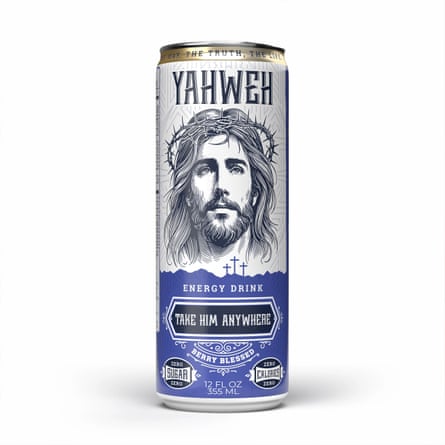
Why are beverages so endorsable? Maybe we’re not willing to trust Hulk Hogan with our dinner plans, but for a quick boost during a long workday? Sure – why not slam a can of Hogan Energy. Drinks tend to be profitable, relatively low-risk, and especially ripe for celebrity endorsements. So it’s become one of the easiest, most popular markets for influencers and celebrities to dip into.
Now, another mega-celeb has entered the beverage game. Or rather, beverage companies have enlisted him in an effort to spread the good word about their product.
Jesus, it turns out, has a branding problem – at least according to the makers of these drinks. Too many people simply haven’t heard the message. “God put it on our hearts to specifically preach the gospel through an energy drink,” the creator of Yahweh says in an Instagram video defending the company against accusations that it exists mainly to turn a profit.
What do you want to talk about?


All this reassessment bullshit is just that – bullshit. If the predecessors of this batch of dumb assholes hadn’t let the counties go 40 years without reassessment, none of this would have happened, so now we get this batch of dumb assholes cobbling together solutions to a problem that simply isn’t going to recur, unless we wait 40 years for the next reassessment.
Pretty much agree. Looks like an attempt to make it look like they’re doing something.
You know, before the election.
You guys have the… uhhh, correct assessment