
Saturday Daily Delawhere [12.26.2015]

 By
1 Comment
 Merry Christmas to you and yours from us and ours at Delaware Liberal.
 By
1 Comment
In his classic study of the politics of the Jim Crow South, Southern Politics in State and Nation, V.O. Key observed that the politics of white supremacy was strongest and most salient precisely in the states and counties that had the fewest white people. In a state like Arkansas or Texas or Tennessee that has relatively few African Americans, there was little need for an explicit white supremacy politics to ensure that white people would, in fact, be supreme. These states, not coincidentally, generated some white politicians who were racially moderate by the standards of the time and place. In Mississippi or South Carolina, where the demographics looked different, by contrast, any hint of racial moderation would be deadly. The smaller white communities in those states were more politically vulnerable, and required a more vigorous politics of white supremacy to maintain their control. It's natural for a toned-down version of that to play out as the United States becomes a less white country. When whites were 80 or 90 percent of the population, they did not constitute a "demographic" that could be meaningfully mobilized around white identity — instead, splits within the white community (North versus South, Protestant versus Catholic) were highly salient. But as whites become less numerous, appealing to white voters as such becomes a more viable political strategy. Trump has surged to the top of the GOP pack by exploiting that opportunity with an unusual level of vigor and an unusual lack of subterfuge. But he's not the first politician to see the opportunity, and he certainly won't be the last. And Democrats who simply ignore the reality that people expressing concern about the changing demographic face of America are in fact concerned about the changing demographic face of America do so at their own peril.


 By
7 Comments
People of all stripes have a great ability to decide that what they cannot prevent is in fact awesome. I would go as far as to say that the big thing to watch right now, the big event, isn't so much Trump and Cruz's poll numbers and whether they'll hold up as the increasing signs that the Republican party is beginning the process of embracing that outcome.It will take some mighty rationalizations, but just wait for it. The Trump (or Cruz) train is coming, and Copeland, Burris and Simple [the smart, reasonable and sober Republicans] are not only going to board it, but they are going to be its Delaware conductors.
 By
6 Comments
 By
29 Comments
By
4 Comments

 By
7 Comments
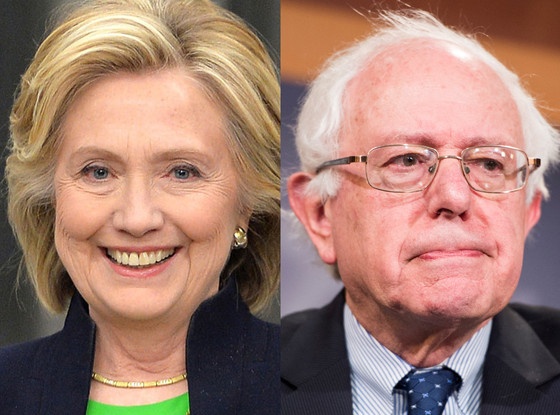
The best moment of the debate came when Sanders, channeling FDR, welcomed the hatred of big corporations and Wall Street. The moderator had asked Hillary if, as a Fortune Magazine headline put it, “business loves Hillary.” “Everybody should,” she shot back—a perfect political answer. The moderator put the same question to Sanders” “Will corporate America love a President Sanders?” “No, I think they won’t.” Sanders replied simply. “So Hillary and I have a difference,” he continued. “The CEOs of large multinationals may like Hillary. They ain’t going to like me and Wall Street is going to like me even less.” “The greed of Wall Street is destroying this economy,” Sanders added. [...] The preposterous Washington consensus that you can be loved by Wall Street and, at the same time, serve the interests of ordinary citizens, is crumbling. So is the American myth of a classless society where everyone can get rich and we all play by the same rules.It was Sanders' second best moment during the debate (his first being his apology to Clinton that all his supporters and his campaign should take a cue on). I liked Hillary's answer and I liked Sander's answer. Hillary's answer was perfect for the general election. Sander's wasn't, but he and his supporters don't really care. The Democratic Primary, and the Republican Primary really, are a showcase of the two theories of electoral politics. The first is that you need to moderate your rhetoric and/or positions in order to appeal to as many voters as possible in order to win a general election. The second says screw that, appeal solely to your base of support so that you can turn out as many of those supporters as possible. After George W. Bush and Karl Rove, the Republicans have fully embraced the second theory. They are constantly seeking the more and more conservative candidate. Many progressive Democrats likewise want the Democrats to pursue the second theory, positing that there are more of us than them, them being non-progressives. I personally would choose a combination of the two: appealing to your base of support with policies and moderates with rhetoric describing your policies. And that is what I feel Hillary is doing.

