Tag Archives: Theo Gregory

Wilmington Mayor’s Race — Undecided Leads the Pack

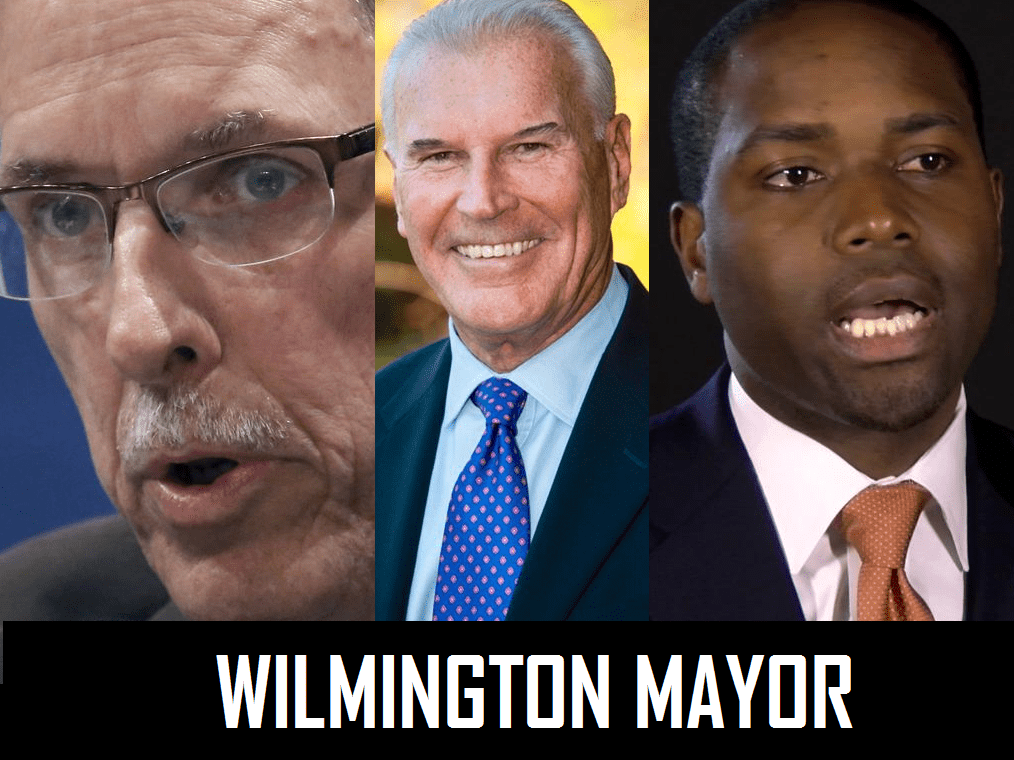
The News Journal released the results of their poll last night, which shows the race being much closer than the common wisdom (including mine) would have suggested. Here’s the numbers:

Kevin Kelly                18%
Mike Purzycki           14%
Dennis Williams      13%
Theo Gregory             11%
Eugene Young             9%
Norm Griffiths            8%
Robert Marshall         2%
Maria Cabrera             2%
Undecided                   21%

The margin of error on this poll is 5.8 and reached landlines only.  This surveyed likely Democratic voters. This polly also asked about registration and primary practices — where we find that this group of likely Democratic voters think that it should be easier to switch parties to vote and that primaries should be open.
So what does this say? You could say that it is anyone’s race. Except for Cabrera and Marshall. With the top tier within the margin of error, you can look at this and know that candidates have reached out and gathered up their base support. And like the NCCo race poll from yesterday, there are a good number of people who are undecided or not yet paying attention.

You could also look at this from Wilmington’s typical elections playbook, whose operating theory is about turning out the greatest number of your friends and relatives:

  • Where there’s more than one white person running, they will split that vote and not be able to capitalize on motivated and reliable white voters to win.  Kelly and Purzycki are splitting the white vote (while Purzycki is likely getting the majority of the switched GOP votes.  Makes sense since he is pretty clearly GOP stalking horse in this Democratic primary.)  Kelley, by virtue of his very deep ties in the community is outperforming Purzycki with African American voters.  Kelly still has the benefit of the Buyer’s Remorse vote.  Purzycki will be unlikely to match that, no matter how much he pays Norman Oliver.  Both will need to expand their base.
  • Whoever can win Districts 1 and 2 wins the City.  This is where Williams and Gregory are really fighting it out.  They are clearly going to split this territory and both will need to expand their base.  This is where Williams won it last go round and he has clearly lost support in this area.  Williams is the incumbent, so being firmly in the middle of this pack with less support than his anemic winning number from 2012 suggests to me that he may have hit his ceiling.  Gregory’s base is here too — which is the flaw in his “not waiting his turn”.  Both will have to get out of their comfort zones to eat into the undecided number.  68% of the polled group think that the city s going in the wrong direction and that is not a good sign for the incumbent Mayor or City Council President.  I’ll add that Griffiths’ base is here too, and while I think that he has an excellent shot at getting votes from other parts of the city, I can’t detect much energy from his campaign to get there.

Eugene Young is not playing by this playbook — he didn’t start with a base of voters who’ve know him for years (or a base of voters handed to him by the Castles).  So he has been building this base one door at a time since September.  With a huge team of volunteers and good fundraising, this is a campaign that started with nothing (except a commitment to bypass the rules and the waiting your turn) and is now clearly in the mix in this tight race.  Right now, he’s in the best position to expand on his numbers, largely because that is what is campaign is organized to do — build a winning coalition rather than turn out your partisans.   One of the consequences of not playing by the Wilmington rulebook is that the Wilmington establishment has been pushing back hard.  Even so, the Wilmington establishment hasn’t been able coalesce and bring any order to this primary field, which should be the signal in how much this establishment is invested in their own interests — not the interests of Wilmington.

One data point that was interesting to me was that with 21% undecided, all of those polled are pretty committed to voting in this primary.  (Notwithstanding the NJ reporting that provides space to people who won’t)  That’s evidence of coalition opportunity for the campaign that can get that work done.

I don’t know what Cabrera or Marshall will do.  Frankly, I think that this poll makes it pretty clear that they should clear the field.  Neither is in a position to win this thing and neither are they in a kingmaker position.  Cabrera has to choose to not run as an incumbent for Wilmington City Council in order to definitively lose the Wilmington Mayor’s race.  Marshall stayed out of the 2012 Mayor’s race (one he declared for) largely because of a poll he commissioned that indicated that both he and Montgomery were pretty far back in the field.  This one shows him further back so he must be in this thing for other reasons.  Again, reasons that have nothing to do with the interests of the City.

So while no candidate is sitting pretty in this poll, I think that Young’s campaign is the one best poised to build, since that is what they’ve been doing for nine months.


Wilmington Mayoral Debate on Public Safety

Last Thursday evening, there was another debate among the Mayoral candidates for Wilmington (except the current Mayor — who apparently does not think he needs to explain or be accountable for his dismal record in this area). This one was focused on public safety and was sponsored by the News Journal and WHYY and held at the Grand. There have been quite a few debates/ public forums for Mayoral candidates in the last month or so, reflecting the very high interest in this race around town. It is a perfect situation for the kind of retail politics that Delaware is famous for and is a perfect setup for all of the organizations around town who feel that they need to work at supporting the public conversation. What you know from talking to people at these events is that there is a great deal of sensitivity about the crossroads Wilmington seems to be on and a great deal of motivation to try to choose someone who will move the City in a much better direction. Public safety is a very large issue — but it is almost always entwined with discussions on education, re-entry, jobs. This is important, I think, because it indicates that many of the most interested voters in Wilmington understand that public safety is a complex issue and that city government has not been a good leader in addressing these issues. While reducing shootings and other criminal behavior is a priority, Wilmingtonians seem ready to hear about long-term prevention strategies as well.

Mayor Williams extends his track record of working to get Wilmingtonians to fall for his usual okie doke — this time running away from a venue where he might have to defend his poor record. Remember that it was his promises on improving public safety that was the whole foundation of his run for Mayor. It seems that the Mayor has no intention of participating in debates this round — he claims that he doesn’t get enough time to respond to criticism. Right? Mayor Williams can’t participate by the rules, so he takes his okie doke ball, goes home and files for the office as a way of getting some attention. Any questions on why the hard stuff isn’t getting done in Wilmington?

Anyway, this debate focused entirely on the public safety question in Wilmington. Again, all of the candidates support some version of community policing (with only Young, Kelley and Cabrera offering any visions of what that might look like). The night’s questioning started out with a very interesting question asked of Eugene Young and Norm Griffiths — and that was whether or not you were scared when you saw police lights in the rear view mirror (the questioner said he was). Young noted that he has lots of relationships with WPD officers, so he isn’t especially fearful, but understood those who do. Mainly because they don’t have the kinds of relationships that enhance respect and understanding and that is what he wants from community policing. Griffiths said he wasn’t fearful (he’s an ex-cop), unless he is violating some traffic law, but he would likely be fearful in another jurisdiction. The next interesting question was posed to Mike Purzycki on how to scale up the work of the Hope Commission. While he’s very proud of how this group has evolved, he was uncertain if it could scale up because of the personal nature of the programs. He did want to see the program extended to the rest of the state and noted that re-entry programs were very cost effective in relation to the cost of imprisonment. Bobby Marshall was asked this same question and got lost in his answer. He wandered through a discussion of a Wilmington Trade School, his Work a Day, Earn a Pay program and public money to do public works projects. He was refocused on the question and pretty much said that the state has to provide more funds and support. Young got in this conversation by noting that there are already alot of organizations doing good work in this area. People don’t know about these organizations and there needs to be re-entry coordination to help people to connect to the resources that exist.

Gregory was asked what the city could do to impact the circumstances that led to the Howard High incidents. He had a litany of programs that he rattled off, accompanied by better law enforcement and then he went into a better WPD management team. It was pretty clear that he was throwing a bunch of answers at this. Maria Cabrera set her tone for the evening by forcefully reiterating what people are feeling (parents, especially) and then her solution was to hold people accountable with no plan to do so.

A question to Norm Griffiths on a Metro PD, had him responding that having the NCCoPD in the city on a periodic and focused basis was a good idea, bit as an ongoing operation. He thought that the collaboration between the NCCoPD and WPD was often difficult because the NCCoPD didn’t know the city — but that Wilmington had the resources to police the city, they just needed to be used better. Kevin Kelley thinks that there can be shared resources on shared problems — gangs, homicides. He wants to change the WPD leadership to one more focused on delivering solutions that may work. Cabrera did a long story about how her son witnessed a crime and didn’t want to report it and how a neighbor to the young man who was recently shot has camera footage that he won’t turn over, nor will he speak to the WPD. She talked about strengthening relationships and when asked how that gets done, she responded with what I like to call the “police cuteness” — basketball coaching, running man challenges as well as sitting at the table together. Theo Gregory forgot the question (partially because Cabrera went on and on and didn’t seem to answer the question until late, but still). His answer was to be an Ambassador for the city (?), changing the culture of the WPD and creating an office at the French St building where people could come to report problems.

Kevin Kelley was asked what 3 items from the WPSSC report that he would implement — Community Police, the Crime Center (open it up to everyone), greater accountability for everyone (leading by example, changing the culture). Cabrera pointed to Philly as a good predictive policing model and again talked about an old deployment plan developed by Bud Freel and Kevin Kelley (and a consultant) that would put officers routinely in the same area so there is some continuity of problem solving. First, it would be good to make sure that the people who came up with this got credit and even better to talk about how this gets implemented — the last time this was on the agenda, the WPD got more officers and more equipment, but the neighborhoods did not get the level of policing they thought they were signing up for. She does have a plan — she didn’t really answer how much of the WPSSC report she’d implement — and noted that her selected Police Chief was already reviewing this plan. The media present didn’t follow up on this interesting bit of info to ask who that person was. Gregory took a page out of some old Management 101 book to say that he would have a plan, he would stick to the plan, put in a good management team, and followup. But not much on the WPSSC document. Young wants to make sure that as many sworn officers are doing real police work as possible — getting IT and HR and other functions that could be at least partially in the hands of civilians. He also notes that much like the Philly effort, it is important to have better training in de-escalation, crisis intervention. Kevin Kelley notes that the mayor has to have a real plan and that has to be executed. He also notes the there needs to be things for young people to do. Purzycki notes that the WPSSC doesn’t criticize the Mayor’s various plans, but does criticize their execution. Griffiths wants to hire a good Chief and also hire good leadership for the rest of the departments. Marshall wants to put cameras in the front and back of cars and implement body cameras. He would engage Lou Schilliro to hire a new Chief.

The next question was also very good — asking Young about how to change the culture where the idea that “snitches get stitches” is more important than getting the bad guys off of the streets. Young noted that the people critiquing the folks who won’t talk don’t live in these communities where the danger is quite real. He says that you change this by getting officers more engaged with residents and residents with officers and building more trusting relationships. He also notes that WPD officers will still come to the door of someone who called an incident in even tough the caller told the dispatcher that he didn’t want anyone at the door. That’s a training issue, but it is tough to create trusting relationships where this still happens. Purzycki answered this question by pivoting to root causes — educational attainment, employment, etc. Kelley interestingly called on ministers and preachers to step up — he noted that they frequently disappear after Sunday and can be a more stabilizing force in their communities. Gregory went off on a tangent on how the Feds (he kept reminding everyone that he was a Federal prosecutor) know how to protect snitches. Here I think he missed the point. Cabrera wants to put substations in neighborhoods again, put more cops on corners and house cops in vacant houses. Marshall wants to change the culture of the WPD and hire a Chief outside of the WPD.

Fireworks erupted when candidates were asked how they would create a productive relationship with City Council around Public Safety issues. Gregory started off by talking about how he operates the current council (weekly, bi-weekly meetings, working together) but this is difficult with a Mayor who isn’t committed to this level of communication and who is afraid to face what people may say. Griffiths notes that there are potentially seven City council vacancies upcoming so a new council will need to work together and probably needs some training. Purzycki was asked what kind of relationship he has with Council and he said he had none. People don’t get along because there is no unifying vision. Kelley has 20 years in Council and noted that no one fro the RDC ever went to a Council meeting. Purzycki shot back with the question — Why should I? Young noted that we all live so close to each other, but we are so far apart. It was important to pick your priority issues and get Council, NCCo, city delegation on the same page in order to make the achievements wanted. Gregory jumped in to say that he always talked with everyone (including some percentages of time he spends with folks — but he did not explain how all of his communication failed to include his Finance Chair in the discussions of the budget “compromise”). Marshall complained that after he got $750K for the new WPD Data Center that he was not invited to the grand opening.

Fireworks were generally avoided in the question about the AGs conclusions on the McDole shooting. There seemed to be consensus that this situation should have been handled better, with more references to more community policing, better training of officers and agreement that the Feds should certainly review the case. Purzycki largely avoided the question by pivoting back to economic change. Eugene Young was the only one who discussed a review and revision of the WPD Use of Force policy, referencing the rewrite and update of the Philly PD policy after a DoJ review.

There were fireworks around the question of how can you assure voters that you have the experience to tackle crime? Young focused on bringing a new perspective to the table — one not part of the city’s musical chairs and one that is in a position to challenge the current culture to change and who can attract some of the best and brightest to work on ideas to improve the city’s safety. He reminded people that tackling crime is about better policing AND about rethinking criminal justice issues. Theo Gregory was asked if this was enough and he said No. He responded by saying that there were nuances to government in the city that were vital and you also need to know the history and you need time to get these things. Young made the point that the only mayor who has a statue erected to him in town is one for Tom Maloney who was 29 when elected. Age doesn’t dictate the impact you can have and he pointed out that Wait Your Turn politics is how we got to this place of crisis. You also can’t make a big effort to attract millennials to town and then tell them that they can’t be mayor. Good ideas are good ideas no matter where they come from. Purzycki said in the private sector for a job like this, Young’s resume wouldn’t get past the door. And then he noted that the 131 years of “experience” on the dais had their hands on the wheel as the city declined. Cabrera criticized Purzycki and the RDC — that they spent lots of money, never reached out to the rest of the community (and she said that there are few black and brown people working in the restaurants at the Riverfront) and that we have to elect someone with common sense. Gregory chimed in to say he was not part of the problem, the current Mayor is. Kelley reiterated the need for change and that people already call him the Mini-Mayor because he has a reputation of fighting for the people. Young ended this exchange by noting that this is still all about our neighborhoods and our kids. He runs a non-profit and comes to the table with a larger vision and some experience in pulling people together to get a larger problem solved. Age is not a prequalifier for affecting change.

The Cattle Call:

Who’s Competitive:

  Eugene Young — He continues to prove that he is serious and belongs at the table. The fact that he has a 360 degree view of improving public safety is a definite plus and a strong signal on changing the public safety status quo. He’s embraced the management recommendations of the WPSSC and released his own Public Safety Plan for Wilmington that reflects this 360 degree view.

Kevin Kelley — to his credit, he has been pretty much on the same message since 2012. I wasn’t sure whether to include him here or in the Rethink category — Kevin speaks specifically about deployment numbers and locations which hints to me that he would also micromanage the WPD. We definitely want Community Policing and improved service, but his specificity doesn’t leave much room for a Chief to do a job, right? He does get the issues and does have a broader solution. Kevin connected better with this audience than Ezion Fair, but he still isn’t quite on his usual game in these venues (that I have seen).

Who Needs to Rethink Their Strategy:

Mike Purzycki — Economic development and root causes are fine, but people need to feel safe on the streets. The Riverfront and Market St have had focused policing for a few years now, so maybe he doesn’t know this isn’t the same across the rest of the city. The dismissal of anyone having to go to City Council from RDC was very telling — even though RDC has asked for city support of some of its projects, they could presume everyone would line up for them. They didn’t need to explain themselves or ask for support in person, because why wouldn’t the council support them? You can see here how the Riverfront is a symbol of how the rest of the city got ignored to make the Riverfront go. The Hope Commission has been controversial, but I think has been more focused of late — it is a mistake not to be able to talk about scaling up this kind of work.

Who Needs to Drop Out:

Bobby Marshall — seriously, I am not sure why he is in now. He sounds as though he is running for his current job rather than Mayor of Wilmington.  Personally, it is appalling to me that he wants to criticize this Mayor on Public Safety when he (and McDowell) would not stand with the rest of the Wilmington delegation to twist the Mayor’s arm into implementing the WPSSC recommendations.  Would not do it.  Instead, he went off to find $750K to throw at the WPD for a Data Center.  A needed Data Center, but I doubt that anyone knows if this was well done and certainly the Mayor dissed Marshall at the opening.  So Marshall’s plan to be the hero of this Data Center is thwarted AND the WPSSC isn’t well implemented.  Marshall should be disqualified just based on that.

Norm Griffiths — I think he held his own better here, but still had no ideas to put on the table.  He didn’t automatically agree with everyone as previous, but he still didn’t have anything to add to the conversation.

Maria Cabrera — She won’t file.  And she is becoming the Donald Trump (as a friend observed) of this race.  Lots of passionate button pushing in the house, but little in terms of  policy or new ideas in evidence.

Theo Gregory — Not much here except it is his turn.  Gregory went out of his way to own the mess of a budget that passed and just based on that he should disqualify himself.  Why he wanted to help own it is anyone’s guess — especially since what passed as “compromise” is an elaborate kicking of the can down the road.  There was no leadership in evidence here, just rearranging of the deck chairs.  I’m also going to observe that while he is rattling off the programs and the offices he wants to implement, he hasn’t done much to queue up a budget that might have some room for that.  And he displays every bit of the Wilmington Leadership Deficit — instead of figuring out how to make the current resources work better for Wilmingtonians, he wants to recreate that capacity.  More turf building that Wilmingtonians will pay for and won’t be accountable to you, either.  *This* is the kind of thing that won’t get your resume through the front door.

Dennis Williams — if you can’t be bothered to debate your opponents and deal with your own promises and track record, you don’t deserve re-election.  Period.

Results of the Complexities of Color Wilmington Mayoral Debate Focus Group

You’ll remember that the CoC in conjunction with the Metropolitan Urban League Young Professionals, Delaware Young Democrats Minority Caucus and IMAC hosted a Mayoral Debate at Ezion Fair on April 18. One of the potentially interesting things that could come from that debate was some polling data — in the form of a focus group — that might start shedding some light on the state of this race. I’ve permission to share this results memo on Delaware Liberal (I will post the actual memo later today — I can’t do that from here right now):

Before the debate started, out of 547 registered outline 90 percent were undecided. However of the decided voters, Eugene Young had the most support.

Focus group demographics:
• 6 individuals – 4 females, 2 males
• Diverse occupations and interest fields
• Ages range: 25 years old to 60 years old

Pre-debate:
50% of the group was undecided
50% of the group lean support towards one or two candidates

Post-debate
20% of the lean support recognized split their vote – adding one or two candidates to their possible candidate.
Undecided maintained their position.

100% said the debate was information and there was a clear benefit from listening to all the candidates provide positions on certain issues.

The group agreed the debate was passionate, but they were not convinced some of the candidates are passionate about the city. The group felt the open dialogue allowed the candidates to try and convey their visions; the moderators played a key role in keeping the candidates on the question.
The two questions that connected with the group; how does the mayor plan to attract young professionals and how to spur economic development for those already living in the city.

Attracting young professionals – Eugene Young gave the top answer
Spurring economic development – Theo Gregory gave the top answer

When asked about the response to all questions most felt three individuals stood out as answering the questions.
• Eugene Young – able to better understand issues facing young professionals even if the Mayor’s office has no actual authority, he mentioned student loans
• Theo Gregory – did not stick to talking points, focus group thought he best directly answered most questions
• Maria Cabrera – coming into the debate she was not seen as serious, but minds were changed by her performance.

When asked if there were candidates who did not answer the question three stood out – Robert Marshall, Mike Purzycki, Dennis P. Williams.
• Williams spent too much time bashing the other candidates and not given answers on what he intended to change – defensive

The general consensus of the group was Norman Griffith did not stand out and people are not aware of what he intends to accomplish as Mayor.

When asked was there a concrete winner the group felt overall Eugene Young and Theo Gregory stood out most relative to the other candidates. The group is impressed with Young’s progression given he has never held an elected office. They all believed he is sincere with his concern regarding Wilmington.

All members of the group felt none of the candidates answer the question; how do you look to improve relations between police and the black community. Of the eight candidates they felt Eugene Young had more to offer than just – community policing, but would have like to hear more detail.

General consensus – the group is tired of the same politicians and feeling like nothing has been accomplished. They want to see more of Ms. Cabrera as well, she may be a viable candidate.

One of the tough things about Delaware politics is the lack of good polling on races. This focus group is too small of a sample for the people who showed up, I think, but we can see some interesting points emerging.

• On a big stage, with alot of candidates Eugene Young was able to leave a very good impression especially on questions that are on alot of people’s minds (Community policing and keeping young people in the city).

• Theo Gregory was actually making sense to people in the room.

• Mike Purzycki did not do himself any favors with this group.

• Neither did Williams or Marshall or Griffiths.

• Maria Cabrera made an impression — enough for folks to be interested in hearing more.

• Kevin Kelly’s name isn’t even mentioned here.

The last item genuinely surprises me. But I think this starts to point to Kevin’s problem — with Pyrzycki and Marshall running, his base is eroding and I’m not sure he can get enough other voters to get him over the finish line.

Young’s supporters volunteered disclosing their support at a greater rate than the others, clearly, but the focus group wasn’t leaning his way.

Still, there seems to be plenty of room for candidates to make their case and capture support. This makes some sense early in this race when some of these candidates hadn’t really ramped up an effort yet. I also think that this shows how much of Williams’ support has deteriorated. I am also interested in the contradiction of the Focus Group’s desire to get past the usual politicians but Theo Gregory being seen as a winner along with Eugene Young. Gregory is one of the poster children of the usual suspects who watched as Rome burned, so it seems that this is a place to differentiate. Young is definitely not one of this usual suspects and while he was seen as an early dark horse, he has pretty clearly overcome most of the criticisms of his running now and seems to be in the current top tier of supported candidates. The people who were having on for him to “wait his turn” should be rethinking their advice.

I didn’t get to the Coalition to Dismantle the New Jim Crow debate last night, but will be at the Public Safety one this Thursday. More then.

What do you think?

(Many thanks to Dr.Morton, the Complexities of Color, the Metropolitan Urban League Young Professionals, Delaware Young Democrats Minority Caucus and IMAC for granting permission to publish these results.)

“Can’t Anybody Here Play This Game?”: Chapter, Oh, 1,000,000 and Something.

I LIVE for stuff like this.

Wilmington City Council pays $1000 so that Councilman Mike Brown can fly back from Florida on the city’s dime to cast the deciding vote to override the Mayor’s veto of cuts to the Fire Department budget only to come up…TWO  VOTES SHORT. Oh, and for reasons that not even Mike Brown can explain, he lied about where he was vacationing. Why? I have no idea. Apparently, neither does he. From Amy Cherry’s WDEL story (watch and listen):

“Monday night Councilman Mike Brown told me he was out-of-state in Maryland.

It turns out Mike Brown lied.

“So why did you tell me you were in Maryland yesterday?” I asked.

“Because it really didn’t matter what I told you, you were going to find out anyway.

“Why lie about it then? Why not tell me the truth?” I asked.

“I don’t think I lied about it, I think I just didn’t wanna tell you where I was,” said Brown.”

Okeydoke. And Brown wasn’t about to fly back on his own dime to vote to save the city money. Still, riddle me this, Batman. How the bleep can Theo Gregory piss away $1000 of taxpayers’ money without even knowing how many bleeping votes he had? Casey Stengel put it best. “Can’t anybody here play this game?”